Ashley Hoffart asks:
Dear friendly theologian! Do you care to comment on this quote when you have a moment? A friend of mine posted it [on Facebook], and it bothers me somehow… but I’m having a hard time articulating my thoughts… I’d love some input.
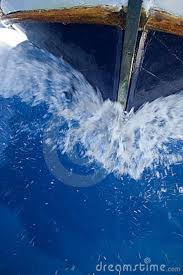
Charles Spurgeon: “I believe that every particle of dust that dances in the sunbeam does not move an atom more or less than God wishes — that every particle of spray that dashes against the steamboat has its orbit, as well as the sun in the heavens — that the chaff from the hand of the winnower is steered as the stars in their courses. The creeping of an aphid over the rosebud is as much fixed as the march of the devastating pestilence — the fall of…leaves from a poplar is as fully ordained as the tumbling of an avalanche.”
Don’t we live in a fallen world? Don’t human beings have free will that tends to mess with other creatures and with the elements, etc? Yes, the Lord wrote the natural laws… but…
This one is tricky Ashley, but I think you’re theological instincts are correct to find a problem here. On the one hand, the author has a hold of something true, namely that everything is in God’s hand and that everything God has created ultimately refers back to God.
On the other hand, such a mechanistic articulation of this basic truth seriously risks compromising other truths of the faith, in particular those related to human freedom. The author grasps at something true, but grasps so tightly that something else slips from between his fingers.More and more theology done in light of what we know about evolution is willing to posit a genuine randomness in the created order (somewhat analogous to human freedom) through which God works. This is consistent, by the way, with the constant Catholic teaching that God works with humans without coercing them. Grace that is coercive is not grace! This is possible because God’s transcendence – God is not “in the system,” not part of the created order, but rather God grounds the possibility of any system – means God’s freedom is not opposed to our freedom or to genuine randomness in the created order but the prerequisite of both.
The famous atheist philosopher Jean-Paul Sarte argued that, if God exists, I am not free. But I am free, therefore God does not exist. For Sartre, God’s freedom cancelled out human freedom. And that makes sense if human freedom and God’s freedom are the same kind of thing competing against one another on the same plane of existence. But St. Thomas Aquinas, who always insisted that God cannot even be grasped by any category, not even one as generic as “being,” knew tht the Christian idea of God was not one in which God and humanity were in competition. If it were, Jesus could only be half-human and half-God. To say that Jesus is fully human and fully God is to say that God and humanity are not in competition, but rather that one becomes more fully human as one becomes closer to God. In the same way, we become more free, not less, the closer we get to God’s will for us.
For Thomas Aquinas, then, God so far exceeds the created order that he could freely choose to effect his will through our freedom, rather than in opposition to it. If this sounds impossible, consider how a great parent or teacher can lead a student or child to excel by opening them up, not by dominating them. This example is limited, of course, as is any example that tries to describe God, but it helps our imagination to see how one can be directed in a way that enhances, rather than detracts from, freedom. The difference, of course, is that a parent or teacher can be thwarted in their efforts, God cannot.
To help us think more about this, Australian theologian Neil Ormerod suggests thinking about how computer programmers can use genuinely random events to generate predictable outcomes. Or how we can say that smoking causes cancer in general when whether or not it will cause cancer in a given smoker is, in essence, random. If we can generate desired outcomes, or predict outcomes, from essentially random events, God certainly can.
It is not necessary to presume that God being God means he finally determines everything. Indeed, when that picture of God emerges, human freedom disappears shortly thereafter. And then the problem of evil becomes impossible and God becomes a monster. The Christian tradition (at least most of it, and certainly the Catholic strand of it; Spurgeon is a Calvinist) doesn’t say God determines everything mechanistically but rather that God responds to whatever we can throw at Him with love. And that response of love is what finally determines everything, not because it makes everything go right, but because love is stronger than anything that could possibly go wrong: Love is stronger than death.
Recommended reading/viewing:
Neil Ormerod, “The God of Creation,” in Creation, Grace, and Redemption, (Maryknoll, NY: Orbis Books, 2007), pp. 3-22.
Denis Edwards, How God Acts: Creation, Redemption, and Special Divine Action, (Minneapolis: Fortress Press, 2010.
Robert Barron, “How Can Jesus Be both God and Human?” VIDEO (length, 2:42).