By Dan Sherven
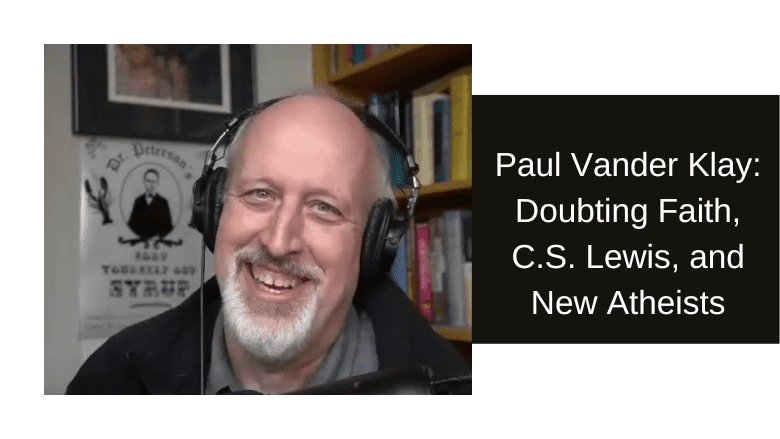
Paul Vander Klay is a minister in the Christian Reformed Church of North America and pastor at Living Stones CRC in Sacramento, California. His YouTube Channel has more than 20,000 subscribers: with videos on Christianity, the meaning crisis, and popular intellectual discourse.
He recently spoke about what his life would look like without faith. “If I lost my faith, I’d definitely want to quit my job just to have some shreds of integrity. I don’t have a lot of admiration for ministers who don’t believe anymore but stand up on Sunday and mouth words because they would lose their day job. I think I would become a hedonist. It would be, well, alcohol isn’t my thing, but I think I’d wreck my family life. I think I’d indulge myself. That’s what losing my faith would look like.”
Vander Klay says whenever he doubts his faith, his questions are ones that any atheist would have: ” ‘Does prayer make any sense? Can you actually believe the Bible? Did Jesus rise from the dead? And even if he did, so what? Is there anything beyond the grave besides the Big Sleep?’ I mean, all of that stuff is in me … It’s like The Walking Dead, where everybody’s got the zombie virus in them. When they die, they turn. We’ve all got this virus in us from modernity.
“So the New Atheists, they’re just letting different members of my consciousness congregation out to talk in public. Things get tipped, and people are like, ‘yeah, I’m going to leave the Church.’ But boy, you really begin to look — [the New Atheists’] day is ending too now. But that doesn’t mean we’re just going to break out into a time when churches are wonderful and full.”
New Atheism is a philosophy insisting on challenging religion. Prominent figures include Christopher Hitchens, Richard Dawkins, and Sam Harris. “No, Lewis pegged it exactly right,” Vander Klay says. “We don’t lack information. We don’t need just a little bit of improvement. We’re rebels who have to lay down our arms. That’s exactly what self-denial looks like.”
Vander Klay says we live in a culture where “the assumptions of secular materialism and naturalism are just so pervasive. So part of what I’m always trying to do is not lose the Christian faith.” He says he’s “seen many people I love around me,” plus others, lose their Christian faith. He thinks that is often because of “the pervasive acid of secular materialism, and all of these assumptions impacting us.” Materialism is the view that only matter exists, not spirit.
He adds, “a lot of this came to the fore with the New Atheists. I got to the point where I knew I needed to do something to not lose my faith in this way, like I’ve seen so many do. So I read a lot of C.S. Lewis, and for some reason, I picked up his book Miracles. I started reading it, and things just began to click for me. Then after I read it I’d been listening to Peter Kreeft, whose work I really like.”
Peter Kreeft is a philosophy professor at Boston College. He’s written more than eighty books on Christianity. “[Kreeft] had some lectures of C.S. Lewis online,” Vander Klay says. “I listened to those and [Kreeft] talked about re-reading C.S. Lewis. I started doing that with Miracles. I was reading the book two or three times a year. Then when Jordan Peterson sort of broke out onto the scene, I thought ‘oh I’d love for Jordan Peterson to read this book.'”
Jordan Peterson is a clinical psychologist and bestselling author from the University of Toronto, known for speaking about religion to popular audiences.” So I was ready to pull up Amazon and find out where — I could mail this to the University of Toronto — then another part of me thought, ‘wait a minute. People give me books all the time, and I never read [those books], what makes me think he’s going to read this thing?'” Vander Klay asks.
Instead, Vander Klay decided “a much more subtle form of colonization was appropriate. [Peterson] came to San Francisco to do an event. One of these small events before he got really big. I also noticed at the event that he had this whole stack — people came to the event with these books they were going to give him.
“And I thought, ‘oh yeah, I thought about this.’ So then I thought, ‘if I want to actually colonize Jordan Peterson, I’m probably going to have to colonize a few more people along the way. And that wouldn’t be a bad thing; I would like to have some conversations. Why not play around with YouTube? Who knows what could happen?'”
Vander Klay says Miracles was “a big part of that. I talked about [the book] a lot. Some people have said, ‘well, you should really do just a whole series on Miracles … I like doing what I’m doing now. Maybe I will do [that series] someday. But Miracles, Lewis had a way of just cutting through — he had a way of exposing the insufficiencies of the prevailing assumptions of modernity.
“Vervaeke talks about it in [Awakening from the Meaning Crisis,]” Vander Klay says. John Vervaeke is a cognitive scientist from the University of Toronto; Awakening from the Meaning Crisis is a lecture series given by Vervaeke. The phrase ‘meaning crisis’ points to a growing disillusionment with life, particularly among young people in the West, due to a lack of meaningful engagement with the world.
“Lewis and Tolkien, they had their meaning crisis at the beginning of the twentieth century; along with all of Europe in the battlefields of World War 1,” Vander Klay says. “And [Lewis] came back; he and Tolkien survived the war. Tolkien was a Christian, Lewis wasn’t. Tolkien, of course, became a Roman Catholic. Lewis, I don’t think Lewis could ever do that, having been raised in Northern Ireland in the politics that were. He became an Anglican. But Lewis, Lewis could not stay an atheist. He can’t do it.”
“The way that the internet and our culture is — [it’s] basically spreading the meaning crisis,” Vander Klay says. “We’re going to continue to see exactly what we’ve been seeing, [which] is that people are going to flee to the Church for refuge. And they’re going to keep doing it. Even really embedded people like Jordan Peterson. That’s what’s happening.”
Watch the full interview with Paul Vander Klay.
Watch Paul Vander Klay’s YouTube Channel.
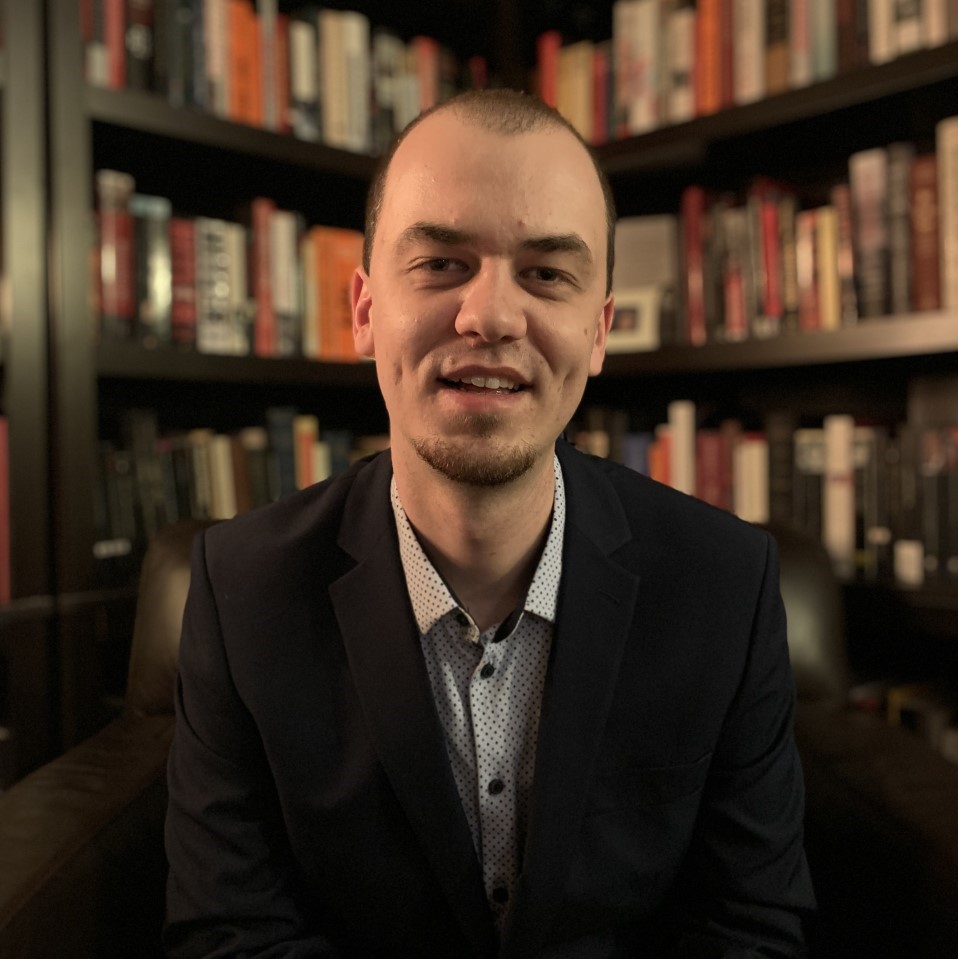
Dan Sherven is the author of three books: Light and Dark, the #1 Amazon Bestseller Classified: Off the Beat ‘N Path, and Live to the Point of Tears. He holds a Bachelor’s of Philosophy, and a Bachelor’s of Journalism. Sherven currently writes for Word on Fire, The Symbolic World, the Homiletic and Pastoral Review, Luther College, and the Archdiocese of Regina. Here, you can find his work.