
Stock Photo Canva
By Dan Sherven
This series of reflections is based on Bishop Robert Barron’s The Mass. Watch Bishop Robert Barron’s The Mass through Word on Fire Catholic Ministries. You can find the first article in this series here.
“They’ve been sacramentalized, but never truly evangelized. Having never quite experienced that cognitive moment of encounter with Christ,” says Bishop Robert Barron in his series, “The Mass.” Building someone up through the Catholic intellectual tradition to give them a propositional, idea-based encounter with Christ is good, but a real encounter with Christ, especially through the Church’s ritual, is much more than intellectual. A real encounter with Christ is done through the nous.
Nous is the Greek word which we translate as heart, sometimes as intellect. Nous is a combination of the heart and mind, but nous is also a direct, intuitive perception of spiritual reality. A perception which is not intellectual. It is a seeing with the heart, entering directly into relationship with God.
Nous reminds us: “We can do nothing perfectly of ourselves, but much can be achieved through us, if we are open conduits to the workings of God.” The limited condition of humanity leads us into thinking we know better than God. But clearly the Infinite can see our life more clearly than we can. That is why we should lead with nous. The nous is how we allow the Spirit to dwell in us. Becoming conduits for the work of the Word, more so than being the fruits of our own thought.
“‘In the beginning was the Word,’ writes John in his Gospel. We are attending to a God who actually speaks—who actually communicates. The creation of the world was formed on the force of God’s Word—spoken into being, ‘thought into being’ as it were, and there is an eternal call-and-response extent within creation.”
In our reading, we find that “God forms his people and [sends] the patriarchs and the prophets forward. ‘The Divine Voice is becoming clearer, more focused, more intelligible.’ [The Divine Voice] speaks to us from ancient days until today, and brings forth the Word Made Flesh, who is Christ Jesus.” There is a growing clarity emerging from paganism, extending through the Old Testament that ultimately culminates in the person of Christ.
Saint Irenaeus fought against Marcion of Sinope for the inclusion of the Old Testament in the Bible, which brings in the Jewish scriptures. This makes the figure of Christ even more complex. Not only does Christ’s mercy cast light back through the Old Testament, but the Old Testament God’s strength casts forward onto the dying Saviour. With both Testaments, we are given a more complete picture of right praise.
In terms of right praise, “the Father speaks his Word (the Son) and that Word is interpreted by the Holy Spirit.” That statement leads us into the debate between objective revelation and personal interpretation. This is one of the main points of contention between Catholics and Orthodox, when compared to Protestants, with Catholics holding that the Church’s interpretation is authoritative.
So, in Catholic Mass, during the Liturgy of the Word, we are participating in what Bishop Barron calls “the story of our being drawn evermore into the right praise of God.” As our reading states, that is “the great narrative we all belong to.”
In this Liturgy of the Word, the Psalm follows a moment of silence. One must remember Christ’s words on the cross: “My God, My God, why have you forsaken Me?” Those words are from Psalm 22, which ends with the line: “They shall come, and shall declare His righteousness to a people that shall be born, that He has done this.” There is an image of resurrection here, as Orthodox thinker Jonathan Pageau notes, and an image of the birth of the Church. It is the Man-God who speaks these words from the cross, echoing the human despair and range of emotions found in the Psalms.
“‘They knew Him,” marvels Bishop Barron, “and our faith comes not from abstract speculation, it comes not from deductive reasoning, it comes not from mythology.’ It comes, rather from ‘this little band of twelve that gathered around Jesus and knew him.’” Our reading states that “the faith of the Church is apostolic, not some vague spirituality.” Meaning that “the Christian faith is not a privately-generated, religious philosophy, rather it is the fruit of the apostolic witness.”
Learn more about Bishop Robert Barron’s The Mass.
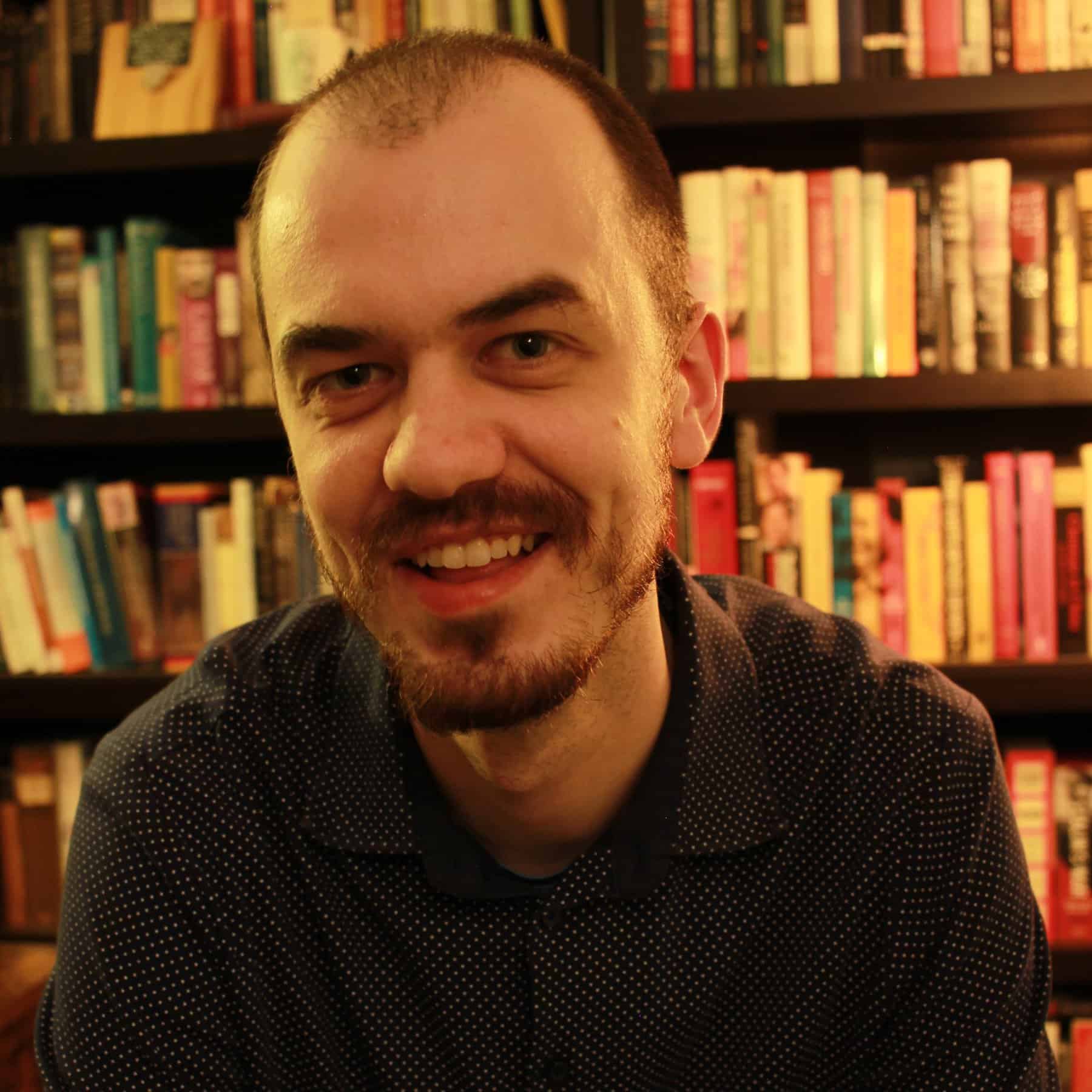
Dan Sherven is the author of four books, including the number one bestseller Classified: Off the Beat ‘N Path and Uncreated Light. Sherven is also an award-winning journalist, writing for several publications. Find Sherven’s work.