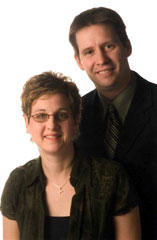
 On the evening of March 6, a number of people – single, dating, engaged, and married, gathered around the kitchen table at the Diocesan centre to listen to my husband, Darrel, and I share how we live as an interchurch family in a mixed marriage, and the international network of support that is available for interchurch families.
One evening, a number of people – single, dating, engaged, and married, gathered around the kitchen table at the Diocesan centre to listen to my husband, Darrel, and I share how we live as an interchurch family in a mixed marriage, and the international network of support that is available for interchurch families.
We began the evening with prayer, and then each person gave a brief introduction about themselves and why they were attending the workshop. As we have learned from our experience, it is important to encourage interchurch couples to meet together and share their stories with each other.
Following the introductions, we provided some important definitions on the types of mixed marriage and specifically, interchurch marriage (when two people from two different Christian traditions marry and choose to share both traditions with each other and their children). We are aware that some mixed marriages do not choose to live as interchurch, for various reasons. Darrel and I do not insist that all couples strive to live as interchurch. Instead, our goal for the evening was to reach out to couples who aspire to live as an interchurch family, and couples who are living as an interchurch family, and share information and our experience with them.
Throughout the evening, we spoke about our childhood experiences, our dating years and the way we find a balance in sharing two traditions within our family. We have lived as an interchurch family for over sixteen years.
As we have learned, many interchurch families face challenges such as not feeling welcome within their churches, and lack of acceptance from their families (i.e. parents, siblings, etc.). Many experience a great deal of pain at the time of Eucharist. These challenges can seem overwhelming, at times. The couples were encouraged to stay connected to their church communities even when difficulties arise. We have found that these challenges can be overcome through understanding and education. We have learned that by facing the challenges, seeking support from other couples, continuing to worship and pray together, and taking time to learn about each other’s traditions, we could move forward. The rewards for us have been a mutual love that is strengthened, and personal, spiritual growth.
Two quotes we shared were as follows:
From Pope Benedict, in Warsaw May 25, 2006:
“The decision (to enter an interchurch marriage) can lead to the formation of a practical laboratory of unity. For this to happen there is need for mutual goodwill, understanding and maturity of faith in both partners, and also in the communities from which they come…My wish is that in this delicate area, reciprocal trust and cooperation between the churches may grow, fully respecting the rights and responsibilities of the spouses for the faith formation of their own family and the education of their children.”From Fr. Gerard Kelly in Terra Spiritus (Volume 3, Issue 1- 2007):
“…those in interchurch marriages are pioneers who are witnesses not just to the possibility of unity in the Church but also to a way of life that is enriched rather than torn apart by diversity.”
Information was provided about the international network of support for interchurch families.
The Association of Interchurch Families was formed in 1968 in England. They have a comprehensive website. Interchurch Families – Regina, which we began in 2000, is a link to this vast network of support.
Many resource articles and brochures were handed out throughout the evening. There were a number of books on display from the Diocesan Library including an interchurch families document titled, “Interchurch Families and Christian Unity”.
A panel composed of Darrel and I, Rev. Carla Blakley and Rev. Ken Koep responded to questions from the group on: the number of mixed marriages performed in a year, concerns about Eucharist, and dealing with family struggles. It was an intimate evening of discussion and sharing.
Maureen and Darryl Chastkiewicz