
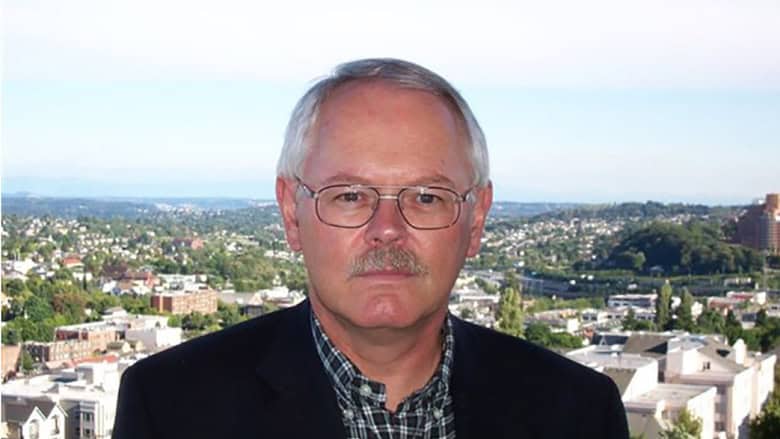
Ron Rolheiser column
Week of November 8, 2026
For ten years, I was part of a pastoral team that conducted a program for couples preparing for marriage. My job was to give a talk on the sacrament of marriage. The scenario was always the same. We would meet on a Monday evening, about thirty couples and myself. There would be the standard introductions and then I would give a fifty-minute lecture on the theology of marriage, followed by a question period. The first question was always the same: “Why do we have to take this course?”
This was fair enough, given that of the thirty couples present only about four or five wanted to be there. The rest were there reluctantly, meaning they came only because they knew that if they didn’t take this course they could not get married in their respective churches.
So, their first question usually reflected some resentment, but it also reflected something much deeper, namely, the absence in them of any meaningful sense of the corporate body of humanity, of our interdependence in that body, and of the body of Christ.
Invariably they would justify their reluctance to be there in this way: “Why do we have to take this course? Whose business is this anyway? Why are my parents, the church, and society trying to interfere in my life? This is my life, my choice, my marriage, my honeymoon, and skin off my teeth if it doesn’t work out! This is not your business, the church’s business, my parents’ business, or society’s business! What’s your stake in my life?”
Indeed, what’s your stake in my life?
In that challenge, one hears the lonely voice of Rene Descartes (1596-1650), all those centuries ago, settling on the one thing that he could be sure of and build upon: “I think, therefore I am!” These young people, for all their sincerity and goodness, at least at this stage of their lives, were more children of Rene Descartes than of Jesus Christ.
Rene Descartes, the seventeenth century French philosopher whose ideas helped to shape both the enlightenment and many of our modern ideas, began his philosophy with the idea that the only thing we can be sure of as real is our own reality (Cogito, ergo sum). We are inside of ourselves and our own reality is massive, real, and undeniable. Everything else appears less real and is real in relation to us.
In street language this says: I am real. My life, my thoughts, my feelings, my heartaches, my headaches are real. Everything else is outside me and less real. I can relate to it, but it’s separate from me. I’m independent of it and it’s independent of me. In the end, we’re all separate from each other, isolated subjects, able at times to temporarily penetrate each other’s reality, but ultimately separate, alone, independent. What’s real is my life, my experience.
In the secularized world today, we are very much the children of that idea. Granted, it has a very positive side: Our belief in this idea is one of the reasons why we cherish and defend equality and individual rights. Western democracy and the various charters of freedoms that we so much take for granted have, to some degree, been underwritten by this idea of personal freedom.
However, Descartes’ emphasis on individuality has an underside. Among other things, this is reflected in a lack of a sense of interdependence and a false notion of freedom that was so manifest in the objections of those young people who were reluctantly taking this marriage course. In their minds, nothing is inherently owed to family, community, and humanity. Why should there be? After all we stand independent of these and we can decide on our own, to what degree we want to buy in, get involved, give ourselves over, participate in, and acquiesce to others’ expectations of us. Others have their lives and I have mine!
This is also manifest today in the attitude people (of all ages) have towards marriage: “Why do we need to get married publicly? This is just between the two of us. We have our own commitment to each other and that’s enough. Who needs a piece of paper? This is nobody’s business but ours.”
Such an attitude would be valid, if we weren’t in our very makeup social beings, irrevocably bound to each other in life. How different from Descartes and contemporary culture is the Christian idea that we are all parts of one body, a single organism, within which one part can’t say to the other: “This is my life and it’s no business of yours?”
Two voices, two choices, two visions: Rene Descartes and Jesus Christ. One speaks of private freedom, loneliness, and individuality; the other of interdependence, community, and shared life.
Like Adult Children of Alcoholics, we, Adult Children of Rene Descartes, might want to reflect more on what we carry unconsciously in our lives because of the household we grew up in.
Oblate Father Ron Rolheiser is a Professor of Spirituality at Oblate School of Theology and award-winning author.
He can be contacted through his website www.ronrolheiser.com.
Follow on Facebook www.facebook.com/ronrolheiser