By Fr. Parker Love
To speak of a theology of the Marvel Cinematic Universe is a complicated thing. In its decade-plus-long history, the MCU has even complicated this attempt further by seemingly changing its approach. In the first Thor film, for example, the titular character, played by Chris Hemsworth, stresses that he is not really a god who performs what humans call magic, but rather, he is simply an alien species, much different from humans, and one that understands so much more about technology that it seems to be magic to simple humans. By Thor: Ragnarok, however, Thor and others do refer to him and others as gods. Furthermore, by this point in the MCU history, other films like Black Panther peeked beyond the veil between life and death and revealed an afterlife much different than any major religion describes, and then in 2022’s television series Moon Knight, we see a different afterlife and are introduced to new pantheon of gods, and they seem to resemble the myths of ancient Egyptian people.
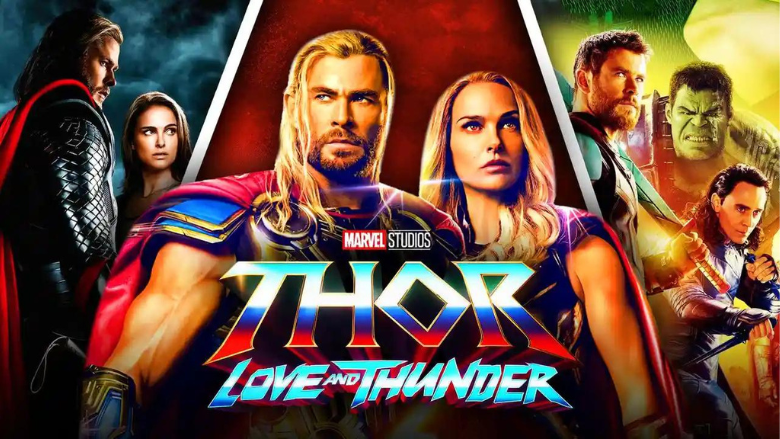
To try to understand how all these different realities and contradictions might exist simultaneously is well beyond the scope of any reasonable endeavour, and certainly beyond any effort that I would hope to make as I explore Christian themes in popular culture, but the not-so-recently-released and soon-to-be-released-on-Disney+ fourth Thor film, Thor: Love and Thunder, explores some really interesting concepts that are certainly worth consideration from a Christian perspective.
With a warning that major spoilers follow, I will briefly describe the plot of the film. Gorr, played by Christian Bale, is so disheartened after the death of his daughter that when he encounters the god to whom he pleaded and prayed, instead of continuing to worship him, he kills the greedy god who laughed at his suffering. From that point forward, Gorr promises to slay all other gods, which obviously puts our titular character in danger, especially because Thor possesses a tool that will allow Gorr to accomplish his plan much easier. To defeat Gorr, Thor needs the help of his once-romantic-partner Jane Foster who, because she wields the weapon that focuses Thor’s power, has similar powers to Thor, but is riddled by a cancer that is slowly killing her when she lets the weapon go.
The relationship that Thor has with Jane, and indeed many of the relationships that Thor has with other characters throughout the film, is what makes it interesting. The on-and-off-again relationship that Thor and Jane had was ultimately doomed to fail when there was such a severe power imbalance between the two, literally and metaphorically. When she is granted the power of Thor, Jane is finally no longer a victim of this imbalance and their relationship can thrive. This example speaks of the need for a certain equality in romantic relationships. While St Paul exhorts wives to “be subject to their husbands” (Ephesians 5:24), he follows up by reminding husbands to “love their wives as Christ loved the Church” (Ephesians 5:25). When one is subject to another who is willing to lay down his life for his subject, there is no power imbalance; there is an invitation for one to lead and another to follow, but following doesn’t make one greater or lesser than when leading; it simply means that roles are different. In our society, we privilege equality, but the reality Christ invites us to live acknowledges that each of us is different, with different gifts and talents, and that all these talents and gifts are meant to be given to those we are invited to serve. Power imbalance means leading because you assume the other is incapable; authentic leadership understands itself as a gift and invitation to love and to let service flow from that love. Indeed, this reality is the basis of all relationships, but especially romantic relationships.
Another interesting relationship that Thor has is with Gorr’s daughter; at the end of the film, when given the choice between killing all the gods in the universe and bringing his daughter back to life, Gorr ultimately chooses to bring his daughter back to life because Thor has offered to raise her in a loving and caring environment, one that still includes the necessary-for-Marvel-movies violence against bad guys. What’s most interesting about Gorr’s daughter, though, is the rationale behind her resurrection. Her father was willing to sacrifice his hopes and even his life so that his child could live. Like how God Himself was willing to lay down his life so that all His sons and daughters might live with Him in the Glory of Heaven, the child of Gorr is the product of divine power, eternity, and sacrifice. At the end of the film, they call this child Love; Love is the product of divine power, eternity, and sacrifice. If there aren’t Christian themes in that, then I don’t know where they are!
The great gift of our Christian faith, as opposed to the polytheism of the Marvel Cinematic Universe, is that we believe in a God who reaches down to us. We believe in a God who offers us a relationship that would seem to certainly hold a power imbalance, but instead, He is willing to be subject to us and the powers of the world to the point of death, death on a Cross. Furthermore, we need not be the product of divine intervention or magical powers or unexplainable phenomena to embrace the gift and invitation to live our lives focussed on God Himself, the eternity that awaits us, and the gift of love which we are invited to live by sacrifice.
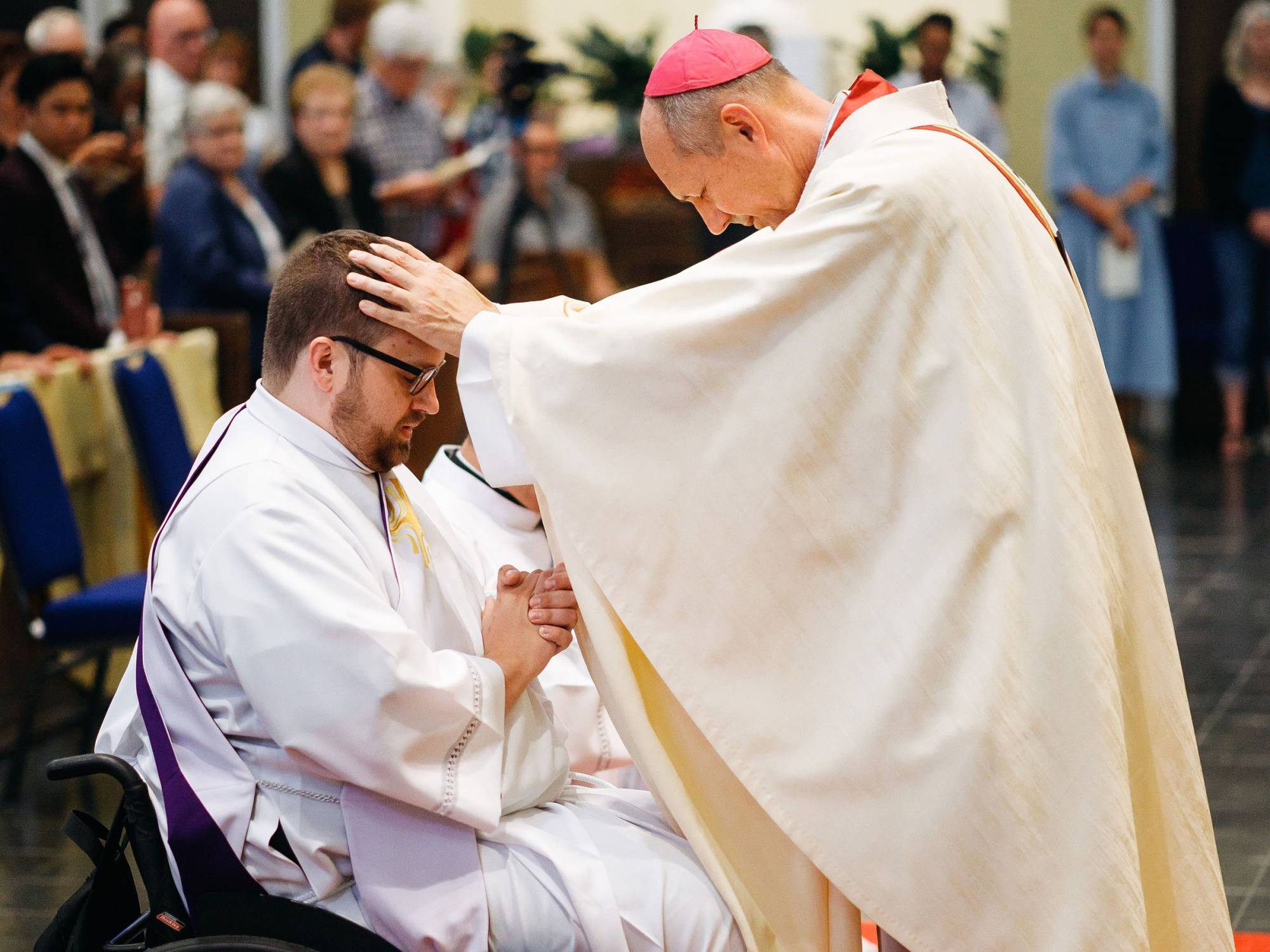 | Fr Parker Love is a Priest for the Archdiocese of Regina. Ordained in the summer of 2019, Fr Parker serves as Pastor at St Augustine Parish in Wilcox, Saskatchewan and as the Archdiocese’s Vocation Director. Somehow, in the midst of this, he still finds too much time to consume media in the form of books, tv shows, and movies. To justify that over indulgence, he also (occasionally) hosts a podcast called Cold Drinks, Questions, and Christ, which can be found here, or anywhere you get podcasts. |