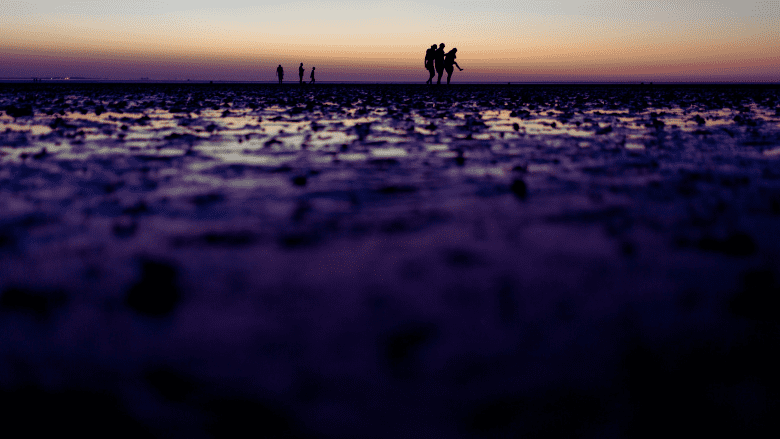
Photo Credit Timon Studler Unsplash
By Tashia Toupin
Lent is a season to reflect on God’s call in our lives. We can view Lent as a difficult time of suffering and giving up some of our joys and comforts, or we could view it as a time to take a Sabbath. Intentional reprieve from the hecticness of the world and an opportunity to listen to God’s voice. To do this, we are asked to take time out of our day to fast, pray, and give alms. With this time, we can contemplate our relationship with God, creation, and neighbours.
Throughout this Lenten reflection series, we will focus on themes including original and communal sin, leaving your home and reliance on hospitality, life giving water and access to it, the moralization of poverty, and new life and resurrection. These themes come from the readings and are developed through the particular lens of the millions of people forced to leave their homes and become internally displaced people, asylum seekers, or refugees. In 2018, the UNHCR estimated 68.7 million people fell into these categories. Now, in 2023, the number is a staggering 117.2 million worldwide. For context, Canada’s population is 39 million. That is over 3 times the population of Canada! Almost all of us can trace our family lineage to those who were refugees or immigrants.
Faced with statistics like this, we ask ourselves, what can we do? What is a reasonable response to this overwhelming reality? The question, “why does this happen,” is at the heart of our week’s reflection.
One answer comes to us from our first reading this week. Original Sin. This is our first reading, the Fall of humanity. There is a profound shift in our relationship with God. For the first time, humans prioritize their own wants and desires above God’s. There is a break in our relationship. Lent can be a time for us to reset our priorities. Why are there wars, land grabs, tribalism, the inequitable distribution of food and natural resources, the dehumanization of groups of people (women, unborn children, refugees, the poor, LGBTQ2S+, or any other marginalized group of people), or any other injustice? A big reason is that we live in a sinful world. The world is full of greed, fear, hate, and many other harmful things. People often say, “that’s part of being human.” Jesus, who was fully human and fully divine, did not sin. If he was human and generous, not greedy; compassionate and merciful, not hateful; and he affirmed peoples’ dignity rather than further ostracizing and being afraid. How can we say then that these tendencies are part of the human condition?
There is much in our world, society, and culture that temps us to focus on and prioritize ourselves, our wealth, our comfort, our convenience and our pleasure over that of others whose basic needs are not being met. We do not often have the time to deal with or even acknowledge how our actions impact others, for good or bad. Our Psalm can direct our prayer this week as we contemplate the far reaches of sin in our lives. “Be merciful, O Lord, for we have sinned. A clean heart create for me, O God, and a steadfast spirit renew within me.”
We do not want to live intentionally sinful lives, so what are we to do? Reject the world and society, our families, and everything we know? Yes, some people are called to live life as a hermit or as cloistered religious; however, most are not. Jesus was engaged in society, travelled around, worked, healed, and was present to those around him. He took time away, too, like in this Sunday’s gospel, as we are doing. Time to reconnect with God and with ourselves. Time to think about how to best love our neighbour, time to contemplate who are those people most in need of love, compassion, mercy, and dignity? It’s all those marginalized groups listed above, and it is your child when they are pushing your buttons, intentionally. Your friend or coworkers who being too needy. That person who you have a bias towards because of their religion, race, or some other factor.
Jesus rejects the glamour of the world that the Devil offers him, he makes a choice to put others needs ahead of what would make his life easier. He makes a small sacrifice to benefit the world. We can do the same! If we follow this model, we are living out the Catholic Social Teaching of the Preferential Option for the Poor. We prioritize others needs ahead of our desires. All the extra things in life that we can only get due to injustices that harm the vulnerable people in our world. In this way, we can refuse to participate in societal sin, we can love our neighbour, we can build a more just and equitable world. It is sometimes simple to do. It starts with mercy for others, particular those who irritate us, or make us feel uncomfortable. The Holy Spirit is calling us to be attentive to something in those interactions.
This week your challenge is in two parts. First, speak aloud, draw a picture, make a list, put reminders in your phone/calendar, whatever works best for you, to make the choice to respond mercifully to someone who is inconveniencing, irritating, or challenging you. Think about why this bothers you so much. What is at the heart of that frustration? Second, wrestle with the thought of what you can do to help a refugee or newcomer in your community. Are there things you can donate, time you can share, or are there attitudes and fears that need to be addressed? Are you are operating out of fear, resentment, hatred, greed, or something else?
It is challenging to have base assumptions upturned. Be gentle with yourself. Ask God give you a clean heart and a steadfast spirit. With God, everything is possible. From our second reading, “the grace of God and the gracious gift of the one person Jesus Christ overflow for the many.” We have received new life in Christ, so let us live those lives as Jesus did. Be generous, not greedy; compassionate and merciful, not hateful; and affirm peoples’ dignity, no matter who they are or how much they annoy you. God is good and merciful, so too should we be.