Fill Your Jars, And Empty Them – By Deacon Eric Gurash
2nd Sunday of Ordinary Time
After God acts to free His people from slavery in Egypt, He draws them to the base of Mount Sinai where, over the course of several chapters in the book of Exodus, they are invited into a unique covenant with God that culminates in a lavish feast .
Covenants throughout the Hebrew Scriptures are the vehicles under which God forms and builds his family. In the acceptance of terms (laid out in the chapters preceding the banquet in Exodus 24), in the people’s commitment in Exodus chapter 24 that “All that the Lord has spoken, we will do” and in the feasting and drinking that followed, the people of Israel become members of God’s family once again.
We know this new relationship is broken soon after in the golden calf incident. And yet God continued to remind his people who and whose they were. Even in the midst of seemingly irreversible exile, God’s prophets spoke of a time when this relationship would be restored, when the great divisions caused by sin would be healed, and they would be family once again with their God. For the prophets like Isaiah today or Hosea elsewhere in the Old Testament, no other image summed up God’s intent in drawing Israel into His own household than that of marriage.
“I will take you for my wife for ever; I will take you for my wife in righteousness and in justice, in steadfast love, and in mercy. I will take you for my wife in faithfulness; and you shall know the Lord.” Hosea writes.
And Isaiah encourages and consoles an Israel on the verge of returning home; a broken people re-entering a broken, war-torn land with the promise that “…as a young man marries a young woman, so shall your builder marry you, and as the bridegroom rejoices over the bride, so shall your God rejoice over you.” Reminding them that, in spite of the sin and division that has defined their relationship with God throughout their history.
It should come as no surprise to us, in light of all this, that the first of Jesus’ ‘Signs’ in the Gospel of John is not a miraculous healing or the raising of someone from the dead. No, the fulfillment of all the Law and the prophets, the starting place for God’s great rescue plan is at a wedding.
Jesus, who epitomizes the perfect, married communion of the human and divine, draws us into this provocative marriage imagery at the very start of his mission and says to us – “This. This is what ALL of this is about.”
And what do we hear and see in this scene?
A wedding with a problem. The wine has run dry.
A mother with a plan. Whose final words in all of the Gospel echo Israel’s own promise at Sinai “Do whatever he tells you.”
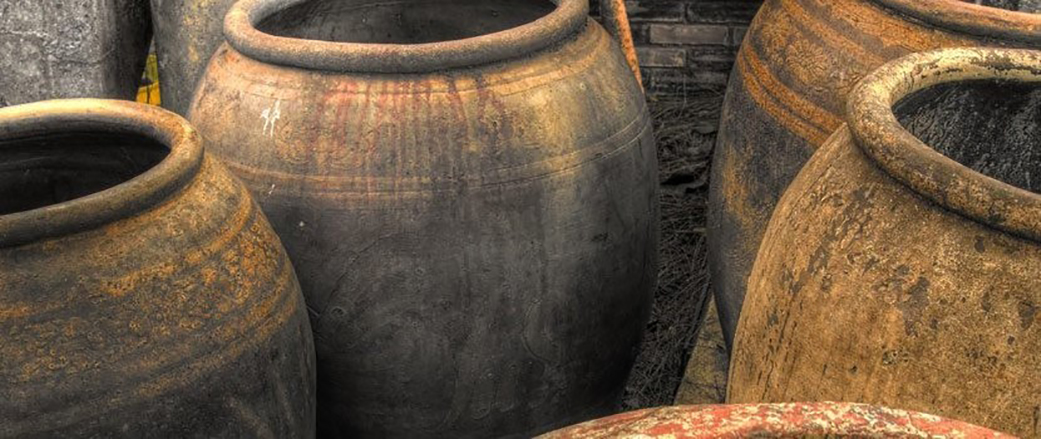
A collection of water jars which suddenly contain an unfathomable amount of rich, intoxicating wine. Far more than any single, human wedding would require.
And suddenly we realize, this is no mere human celebration. The one who embodies the perfect wedding of humanity and divinity begins his great work with an invitation to a heavenly wedding feast.
This day too the prophets saw “On that day,” declares Amos, “The mountains shall drip sweet wine, says the Lord, and all the hills shall flow with it.”
Here, we see the whole of our human condition brought face-to-face with the deepest desire of our Builder’s heart. See in this scene the water of our own efforts to improve ourselves and our state in life. In particular, as this Week of Prayer for Christian Unity begins, I find myself thinking about the wonderful, and yet still imperfect steps and stumblings towards unity that we’ve taken thus far as Christian brothers and sisters in a bruised and fractured church.
Here too we find the water of our heartfelt but imperfect striving for justice in the world at large. Our commendable efforts to improve the lot of the poor, the disenfranchised and the forgotten in the world and in our own homes and communities, that till seem to fall short.
We should see those tall stone jars filled to the brim with our desires for healing in our families, healing for our planet, healing in our relationships with our Indigenous brothers and sisters. Healing for victims in all their varied forms.
In the face of such overflowing need, we could easily become dismayed and discouraged. As Israel felt in exile when it seemed they had been struck a wound that could not be healed.
And yet Mary’s simple command continues to ring, “Do whatever He tells you to do.” And what does he command?
Fill your jars and empty them.
Bring them to me, overflowing with the water of all your works, all your dreams for wholeness, for healing, for oneness in heart, mind, and soul among the human family. Bring them to my table, to the feast I have set before you and see what I pour out, through you.
It is no accident that our Church presents us with this grand commission in the context of a wedding feast as we enter Ordinary Time once again. We have just completed our Christmas festal celebrations. We have just lived again the experience of Christ’s birthing into the midst of our broken and wounded world. He comes with the promise of healing, and he comes to with an invitation to participate in his mission.
Fill your jars and empty them.
Fill them with your heartfelt desires for healing, and wholeness. Fill them with the hundred and one seemingly mundane and insignificant expressions of the gifts we have been given. Fill them with your insufficient apologies and weak words of comfort for friends and family in distress.
Fill them, and empty them – and let us see the rich wine that only Christ can make of all the water we bring.