By Fr. Parker Love
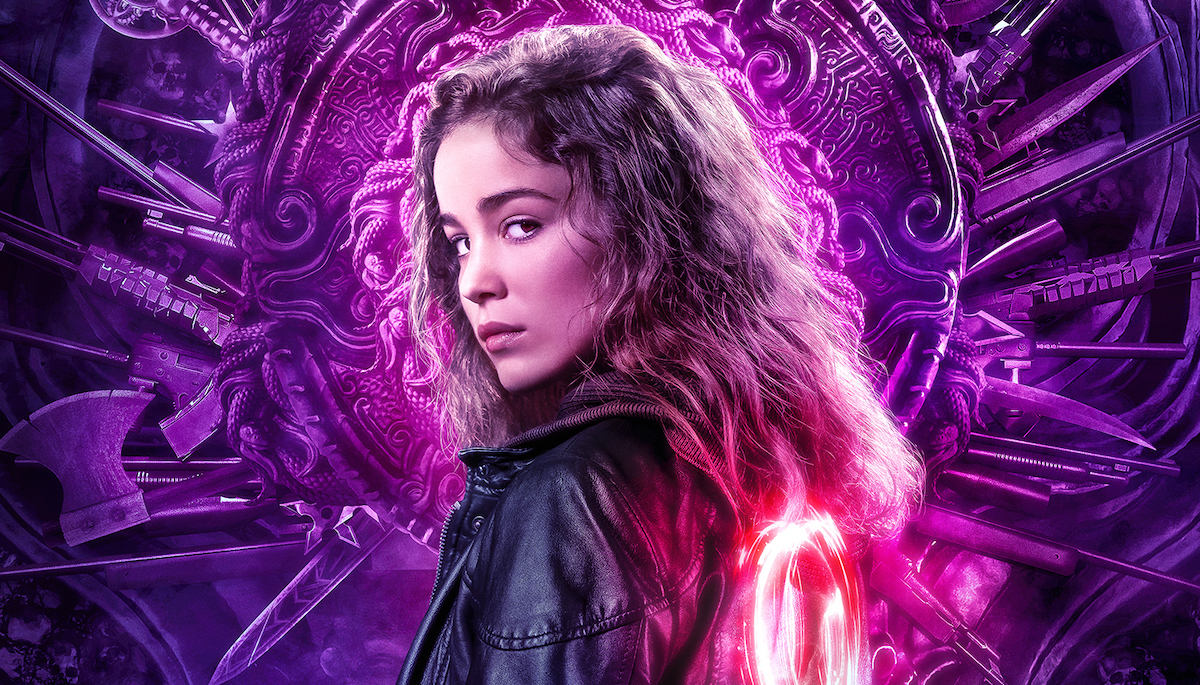
One of Netflix’s newest original series is the TV series Warrior Nun; based on the Canadian comic of the same, the first season of Warrior Nun tells the story Ava Silva, a quadriplegic orphan who is granted super powers after she is supernaturally raised from the dead and chosen by the Order of the Cruciform Swords to be the newest in a long line of, well, warrior nuns.
The show does what it tries to do relatively well; that is, it tells a story about demon-fighting nuns in the modern world. In the show, the Church and the secular world argue about and fight for the use of science and technology, and the lines between good and evil are blurred as a Cardinal works hard to achieve political power in the Church and a scientist uses materials that have been long-hidden by the Church to reach the metaphysical world.
The show is not deep, and it’s definitely not based on fact, but it does make for some pretty decent trash tv—tv that is fun and not overly exhaustive to watch.
What is most interesting to me about the show is its attempt to be inclusive. Inclusivity has been a cultural trend for some time now. The point of inclusivity is to represent diverse groups and to hear from diverse groups because diversity is important. Including diverse groups in decision making and the execution of those decisions is what is meant by inclusivity, and it’s a good thing. Inclusion is a good thing from a Catholic perspective because it is a response to our call to build up the weak and the oppressed. Inclusion is also good because the diversity it promotes helps us to identify our biases.
As the call for inclusion in media has grown in popular culture, Netflix has responded and made inclusivity a main focus of the content that it hosts and produces. Netflix even has a position in its corporate structure for a Vice President in charge of Inclusive Strategy. Netflix has been open about the fact that it is trying its best to have parity in the gender identity of its staff, including its technical and creative operations. Similarly, Netflix tries to represent a diverse racial and sexual groups in its media content and technical work.
Warrior Nun embodies Netflix’s attempt to be inclusive well. The show’s protagonist and many of its main characters are female. About half of its episodes have female directors, and another half have female writers. The cast is also racially diverse; set globally, the show has many characters that are part of what Canadian and American groups might call racial minorities. Disability is represented in Ada, who is miraculously healed of her quadriplegia, and one of Ada’s closest friends from her time living in a long-term care facility plays a pivotal role in the first season. LGBTQ issues are also a main focus of the show’s attempt to be inclusive; there is a transgender character, and the homosexuality of one of the past warrior nuns is the focus of one episode.
In the midst of these great steps forward for inclusivity, I found myself disheartened at the representation in Warrior Nun, however. One group that I had hoped to find represented in a show named for and featuring heavily nuns was the Catholic faithful. Although not a small group, and especially when looking at global numbers, rarely a minority, the Catholic faithful are rarely represented in media. Christian and Catholic characters are often the butts of jokes, and often, faith is an attribute that is readily discarded when a new storyline for a character might be hindered by a past faith that they expressed. What I had hoped to find most in Warrior Nun was a character who had a faith similar enough to mine that I could see my own faith.
That’s another reason why inclusivity is important. Even in fiction, female super heroes tell little girls that they can be heroes; indigenous professionals tell indigenous people that they belong in the corporate world too; disabled people doing diverse things in media tells disabled people that they do not have to be limited by their physical abilities.
In Warrior Nun, I had hoped to see Catholics who let their faith impact every choice they make in their lives; I had hoped to see Catholics who represented the diversity of our Church members whose spirituality is as diverse as the spirituality of the canonized saints. I didn’t get that kind of diversity, and for that reason, the inclusion featured in Warrior Nun seriously lacked.
 Fr Parker Love is a Priest for the Archdiocese of Regina. Ordained in the summer of 2019, Fr Parker serves as Parish Priest at St Augustine Parish in Wilcox, Saskatchewan. He also often helps at Christ the King Parish in Regina, and he serves at the Archdiocese’s Vocation Director. Somehow, in the midst of this, he still finds too much time to consume media in the form of books, tv shows, and movies. To justify that over indulgence, he also hosts a podcast called Cold Drinks, Questions, and Christ, which can be found here, or anywhere you get podcasts.