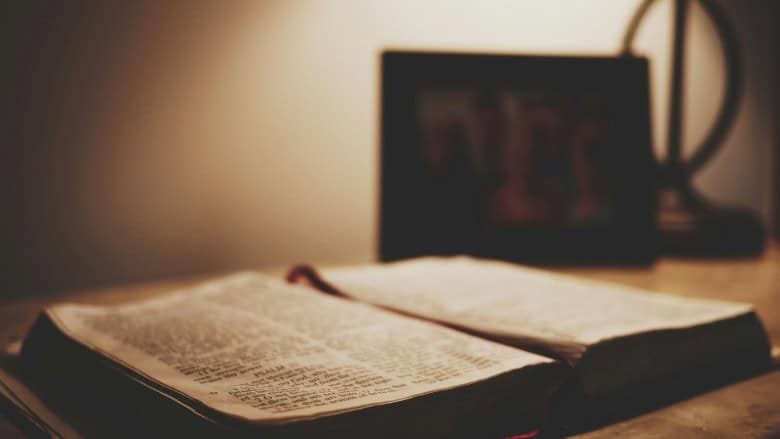
(Photo Credit Unsplash – Aaron Burden)
By Holly Gustafson
As the sacrament coordinator at Christ the King Parish in Regina, I have the great pleasure of welcoming dozens of new babies and children into the Church community through the sacrament of baptism every year and, along with that, meeting new parents, some of whom are making their way back to the Church after some time away. The faith journeys of these new parents are each unique – the detours they took along the way, the paths that brought them back – but there is a common theme that runs through not all, but most, of the stories they tell when I ask them why they have chosen to have their child baptized, often after spending years away from the sacraments themselves. Usually, it’s the faith habits of their childhood – and their own experience of receiving the sacraments and wanting the same for their children – that draws new parents back to the Church.
But when I invite new parents to share some of those memories of faith life in their childhood, oddly enough, the family traditions of Christmas and Easter seldom come up. People rarely mention Advent wreaths, Lenten fasts, Christmas Eve Mass, or Easter Vigil. Instead, it’s the regular, ordinary moments and traditions that these new parents tend to remember – weekly Mass as a family, grace around the supper table, Bible stories read at bedtime, the rhythm of the rosary prayed in the evening. It is these simple faith moments and habits that new parents long to recreate in their own families, and baptizing their child is often their first step on this reclaimed path back to living out the Catholic faith in their home. And there is no better time in the liturgical year to build the habit of a living faith than Ordinary Time.
Ordinary Time is time along the journey to put your head down and make up some ground. In the ordinariness of it all (no weeks-long seasons of preparation leading up to giant feast days), we get to build habits, doing over and over, for a season at a time, the same things until they become routine. And in the habitualness of it, we get to cover real territory in our spiritual journey, establishing a regular prayer life, building virtue, and developing a habit of hope that can support us through the valleys on our journey ahead.
Here are three things we can do during Ordinary Time to build faith habits that can carry us through the inevitable highs and lows of the spiritual life:
- Establish a daily prayer routine.
There are myriad prayers to say throughout the day, which can sometimes feel overwhelming, so minimally, choose a specific set of prayers that you will say at the beginning and the end of the day, and build the habit of praying these regularly. These might change or be added to during other liturgical seasons like Advent and Lent, but a defined daily prayer habit is especially helpful in those periods along your spiritual journey when it is difficult to pray or when you are returning from a lapse in routine.
- Develop a rosary habit.
October is the month of the rosary, and May is the month of Mary, but Ordinary Time is ideal for developing the habit of praying the rosary daily, even just a single decade. When Lent and Advent come around, you can dig into specific mysteries or decades, and having a regular rosary routine makes this all the more natural.
- Create a prayer corner in your home.
I always love when I get to pull out the Advent wreath for the first Sunday of Advent, and during Lent, I often put a bowl of sand, a cactus, or a candle in the middle of the dining table to remind us of our desert journey. But having a little home oratory – a space in our home for a candle, a cross, or an inspiring prayer or image – set up all year long reminds us that our faith is meant to be lived not just in the glow of Christmas lights or the austerity of Lent, but in the tiny celebrations and sacrifices of daily life.
Certainly, there is a place for the grand, festive liturgical seasons that often breathe new life into our spiritual year – Lent jars us from our attachments, Advent invites us to continually draw nearer to God among us, Christmas and Easter are festivities that even the most secular among us recognize and even celebrate. But let us not forget the days of ordinary time, through which we put one foot in front of the other along our spiritual journey home.