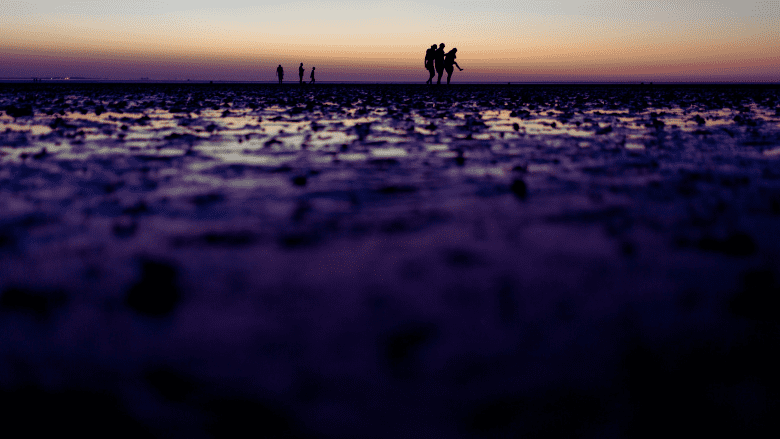
Photo Credit Timon Studler Unsplash
By Tashia Toupin
Last week, we spoke about the communal aspect of sin and how we are called to respond by looking outside of ourselves. The shift in focus from our own wants to the needs of others. When we move beyond ourselves, it often is depicted or spoken about as a journey away from home. “Home” are those things that comfort us, keep us safe, and guard us against the rest of the world, particularly the suffering of others. Embarking on this journey forces us to question what we know about the world, our perspectives and presuppositions, and how we relate to people, places, things, nature, the world, and our God. This ultimately will lead us to learn new and varied ways of being. Although this is not one of our Lenten Sunday readings when we recall the theophany/self-revelation of God to Moses in the burning bush. God tells Moses that “I am” is the Holiest of Names. Therefore, “being” and being more like God is no small feat. This is the task before us, to be more like God.
Abraham leaves his home in this week’s reading to bring blessings to the world. All the prophets and the disciples leave behind their homes to follow God. We, too, are called out of ourselves; to seek righteousness and justice. When we leave our homes, spiritual or physical, we are now in a place of vulnerability. We find ourselves in a strange land, often relying on others’ hospitality.
Many of us will choose to “leave our home” in search of God, self-growth, education, love, etc. Many people, however, have this decision forced upon them. The difference can be traumatic and transformative, sometimes positive, other times unimaginably harmful.
We are all on a journey this Lent, one that we have chosen to engage in. Many people are forced out of their homes, into strange lands, and into severe vulnerability. Those forced to flee rely on others’ generosity and hospitality for survival. Many external factors can force people out of their homes. Famine like the one we read this week in our psalm or in the news in Somalia and the East Coast of Africa for the seventh consecutive year. Wars like in Eritrea, Burundi, Rwanda, Iran, Palestine, Peru, Syria, Ukraine, etc. Ideological or political reasons often force people out of their homes and homelands, families become separated, and everything safe and comforting is taken away. Lives are turned upside-down, and more often than not, this happens violently. Importantly, this occurs not because of anything they did or any choice they made. We will discuss this more in the reading of the man born blind, the fourth week of Lent.
This week we are invited to reflect on a time when we have left “home.” Where did we go, and why? What was the hardest part? What did you learn from that experience? How do you wish others had treated you? What supports would have been helpful for you? Write a few bullet points about this. Maybe you want to share this with a spouse or a loved one. Thank someone for helping you in your time of need, or say a prayer for them. Once you have reflected on your own experience, the question turns to how we can support those in need today. Pay it forward, if you will.
This weekly reflection focuses on refugees. Often, they are violently and callously evicted from their homes. Their families, food culture, safety, security, and everything else they know is taken away from them. What can we do? This Sunday’s gospel gives us some ideas. Jesus takes his friends up the mountain and is Transfigured. Moses and Elijah show up. Peter, who is somehow unperturbed by the appearance of these two prophets, says immediately, “it is good for us to be here; if you wish, I will make three dwellings here.” Peter does not question their arrival or feel imposed upon because it is late evening. Rather, he is joyful and wants to make them feel welcome. There is obviously something going on that he does not completely understand (much like today’s geo-political events), but he is not burdened by that. He notices that this is good they are here with us. There is an opportunity for a deep encounter.
How does Peter’s reaction to unexpected guests model how we act and feel when we hear of the millions of refugees and displaced people worldwide? Do we rush to find them homes and try to be with and learn from them? Alternatively, are we led by fear, suspicion, or something else?
This week let us ask the Holy Spirit to show us ways to be more welcoming, hospitable, caring, and motivated by love rather than fear when we meet new people. Create a list of five concrete actions you can practice this week to accomplish this. As Jesus was Transfigured and the disciples were shown his heavenly glory, help us to be more Christ-like in our lives, to love as you loved, to be your hands and feet here on earth, and to build your kingdom.