
By Patrick Malone
Paolo Sorrentino’s recent television series The New Pope is a continuation of the story begun in The Young Pope, which was infamously a source of controversy among some Catholics, largely regarding its unsettling depictions of papal politics, the ambiguous faith of its Pope Pius XIII, its sexual content, its occasional irreverence. Ultimately, the story revolves around Pius XIII, who seeks to spark a revolution of faith, in which Catholics (and others) are drawn in and seduced into the mystery of God, living in but not of the world, partly through a renaissance of Catholic traditions and aesthetics.
Despite the controversies, both shows have had moments of greatness, such as moving depictions of friendship with the disabled; however, their weakness is that, despite telling a story that purports to glory in Catholic aesthetics, they have an utter lack of any sense of liturgy, of how that beauty is incorporated into worship.
Throughout The New Pope and its predecessor, we hear sporadically about liturgy – about people going to Mass, about references to controversies between the Ordinary and Extraordinary Forms of the Roman Rite – but we see little in the way of prayer, apart from Pius XIII’s bold demands of miracles from God, which, while they live out the Gospel promise that those who ask shall receive, are so fundamentally idiosyncratic in form that they have vanishingly little to do with the Church’s worship and everything to do with Sorrentino’s dreams.
When we do encounter liturgy, the show falls on its face. Almost all Mass scenes are limited to homilies, inasmuch as they are not mere speechifying with little discernible liturgical function delivered from behind an ambo. In the penultimate episode of The New Pope, a funeral takes place in St. Peter’s Basilica. We see people processing to the altar, and then most of the rest of the funeral scene depicts a platitudinous eulogy amounting to an impromptu canonization. Dic nobis: on exactly what Catholic imagery is The New Pope drawing here? There is no expression of Christian hope in the resurrection of the dead and for the end of suffering, no attention to the Word of God in the Scriptures, no receiving Christ in the Eucharist, no final commendation of the soul to God. This Catholic funeral is reduced to a man’s speech which is more indebted to Moralistic Therapeutic Deism – a generic worldview according to which God makes no especial demands beyond niceness and all basically nice people go to Heaven – than to the faith which is ever ancient and ever new. It represents the worst stereotypes of comfortable suburban worldliness, despite the show’s other demands to leave that comfort zone.
A second example: in the final episode, Pius XIII leads his successor Pope John Paul III and the Cardinals in prayer in the Sistine Chapel. Bizarrely, they stand in front of the altar, their backs to the altar and to Michelangelo’s Last Judgment, and pray. For one formed in Catholic worship (let alone a zealous advocate of ad orientem worship) it is jarring to see priests praying with their backs to the altar and the cross, facing the empty nave as if they might as well be facing anything. Churches are designed to focus the priest and the congregation towards the altar and the cross, towards the liturgical East signifying anticipation of the Resurrection, towards God, but Sorrentino apparently had come up with cool blocking, never mind how Catholics actually pray.
I do not criticize these scenes merely to make petty nitpicks regarding technical accuracy; this liturgical illiteracy is a fundamental problem for a show that is centred around a character – Pius XIII – who certainly does not share that liturgical illiteracy. The show talks about Catholic mystery more than it shows it; surely the incense which clouds our vision of the sacred would have functioned rather neatly for Sorrentino’s purposes when he has Pius XIII talk about the mystery of God. The New Pope talks all the time about the Church being apart from the world, but when it comes to the Church’s worship, it’s as if the directors had never before stepped foot in a Catholic church. It effectively amounts to cultural appropriation: aliens to the culture plunder its beauty without knowing what it means or what to do with it, and we Catholics are left to bewilderment at the bumbling. As Josh Nadeau says, it’s a “story about Catholics with too little Catholicism involved.”
This comes to a head in the final episode, when terms such as “fundamentalism” – properly a term which denotes a phenomenon rooted in 19th Century Britain and America, not just a synonym for “traditional” – are thrown around as if the speakers don’t know how to look up the definition and coherently apply that definition to the story at hand. We are suddenly warned of the dangers of fundamentalism and fanaticism in ways that seem to be primarily intended to assuage HBO subscribers that faith shouldn’t be too demanding; crosses need not be assumed; the violent will not bear away the Kingdom of God. We should love and welcome everybody and strive to find the middle way, the show rightly says, but all-consuming zeal, informed by millennia of Catholic Tradition and traditions, being a sign of contradiction to the world, is going too far.
Now, yes, the fanatical characters The New Pope depicts are more than merely zealously committed to Christ, but have indeed lost their way somewhere because of their idolization of Pius XIII. That’s not wrong to rebuke, but the rebuke is presented such that it seems to impugn Pius XIII’s entire project of revolution and of being a sign of contradiction, not merely its perversion. Superficial worship, or an unthinking adherence to traditions in the absence of recognizing Christ in others – particularly the poor – will solve little, but that is different from understanding those traditions as helping Catholics encounter God and forming them in charity, as the show had heretofore hinted, and in The New Pope’s hurry to compromise, little is left standing, least of all the Catholic aesthetics in which the show so delights.
At the end of The New Pope, the show’s moment of greatness flickers; its Church walks up to the doors of standing apart from the world and truly unsettling the comfort of its audience, but then it sees those critics, that worldly Footman, snicker at anything too different, dismiss commitment to faith that transcends worldliness and Moralistic Therapeutic Deism as “fanatical”, and in short, the show is afraid, immediately stepping back to the world. How could it presume to make that demand? It returns its prophetic Pius XIII, back from the metaphorical dead, to the sea, seemingly assuring us that whatever he said is not what the show meant, that is not it at all. The New Pope seemingly doesn’t want to be a sign of contradiction after all, which is what I had thought The Young Pope understood so well.
In fairness, there has been promised a further season, which means that, when the story is complete, we may look on The New Pope rather differently. But to earn that different regard, The New Pope will have to do more than worshipping with its lips. Time will tell whether this is merely a setback within the story, or a more fundamental setback of Sorrentino’s storytelling.
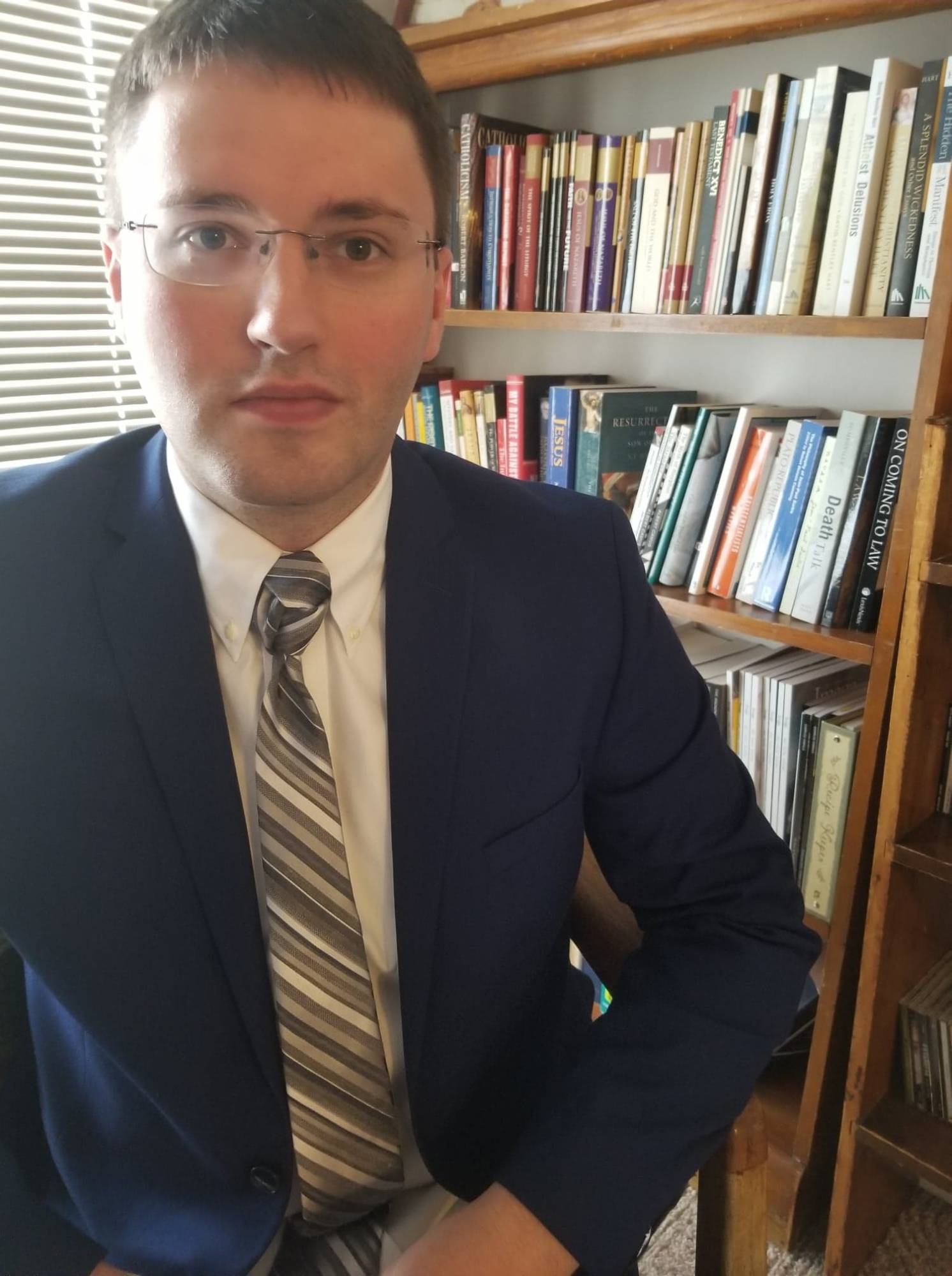 Malone has a Bachelor of Arts Honours in English from Campion College at the University of Regina, and a Juris Doctor from the University of Saskatchewan. He has written on literature, film, and culture for Catholic Stand and has also been published in Millennial Journal.